A Proxmox Windows 11 VM needs two installation files: the Windows ISO and the VirtIO driver ISO. Windows Setup will not see the virtual disk or VirtIO network adapter until you load those drivers, so this guide handles the storage driver first, the network driver before OOBE, and the remaining guest tools after Windows starts.
In July 2025, I was using a Windows 11 virtual machine on Proxmox regularly, and the driver step is what makes this installation different from a typical VM. The procedure below covers an x64 Windows 11 guest, while the dedicated Proxmox guidance cited throughout is scoped to PVE 8.x.
Download the Windows 11 ISO and VirtIO Drivers
You need the current Windows 11 x64 multi-edition ISO and the current VirtIO driver ISO. If you’re searching for a Windows 11 ISO for Proxmox, use Microsoft’s standard x64 download because Microsoft specifically supports it for creating a virtual machine.
1. Download both ISO files from their official pages.
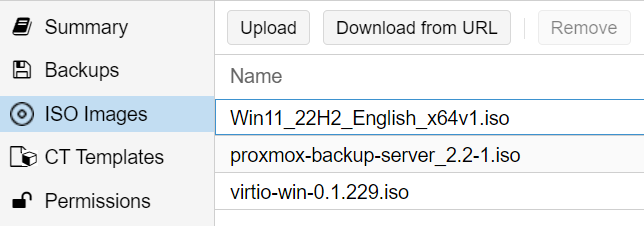
2. In Proxmox, open the storage location that accepts ISO files, select ISO Images, and upload both files. The filenames shown in the screenshot are older examples, so use the current downloads instead.
Proxmox Windows 11 VM Settings and Best Practices
These Proxmox Windows 11 VM settings satisfy the important Windows requirements and use VirtIO for the virtual disk and network adapter. Microsoft requires UEFI firmware capable of Secure Boot, TPM 2.0, at least 4 GB of memory, two virtual processors, and 64 GB of storage, though you’ll probably want to allocate more resources for a demanding workload.
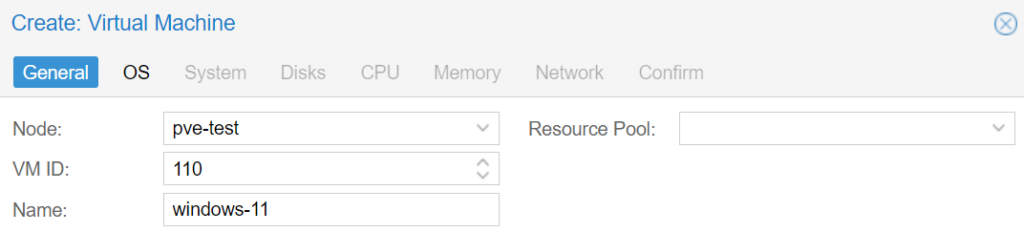
1. Select Create VM, enter a VM ID and Name, then select Next.
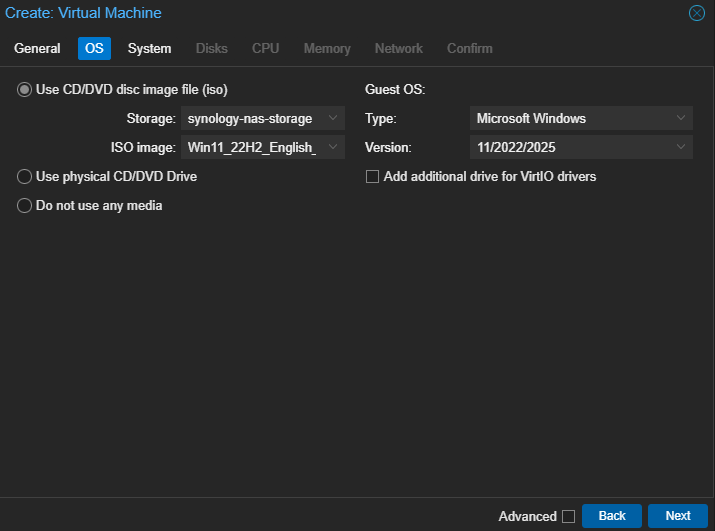
2. In OS, select the Windows ISO, set Guest OS to Microsoft Windows, and choose Microsoft Windows 11/2022/2025.
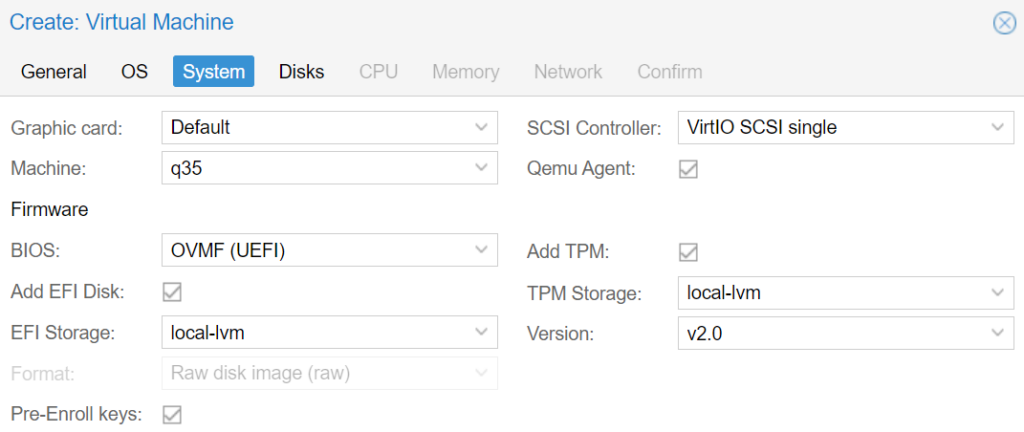
3. In System, use OVMF (UEFI), add a TPM 2.0 device, enable Qemu Agent, and select VirtIO SCSI single as the SCSI controller. Store the EFI and TPM state on storage that fits your host design; Windows doesn’t require the specific location shown in the screenshot.
4. In Disks, use the SCSI bus, set the disk to at least 64 GB, then enable Discard and IO Thread. Write back favors performance, while the safer No cache default is slower, so choose based on how the host storage is protected.
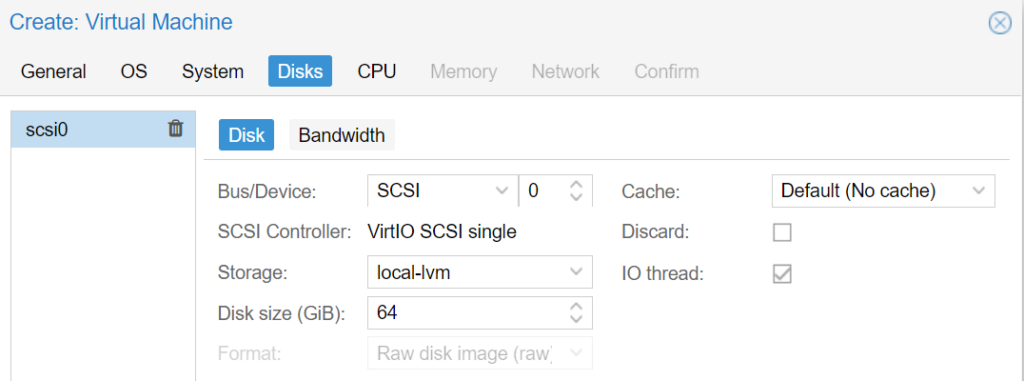
A 64 GB disk meets Microsoft’s minimum, but Windows updates and applications can consume it fairly quickly. You can increase the Proxmox VM disk later if necessary.
5. Assign at least two virtual processors and 4 GB of memory, then set the network model to VirtIO (paravirtualized). Select the appropriate bridge and VLAN tag, or follow the separate guide to configure a VLAN in Proxmox.
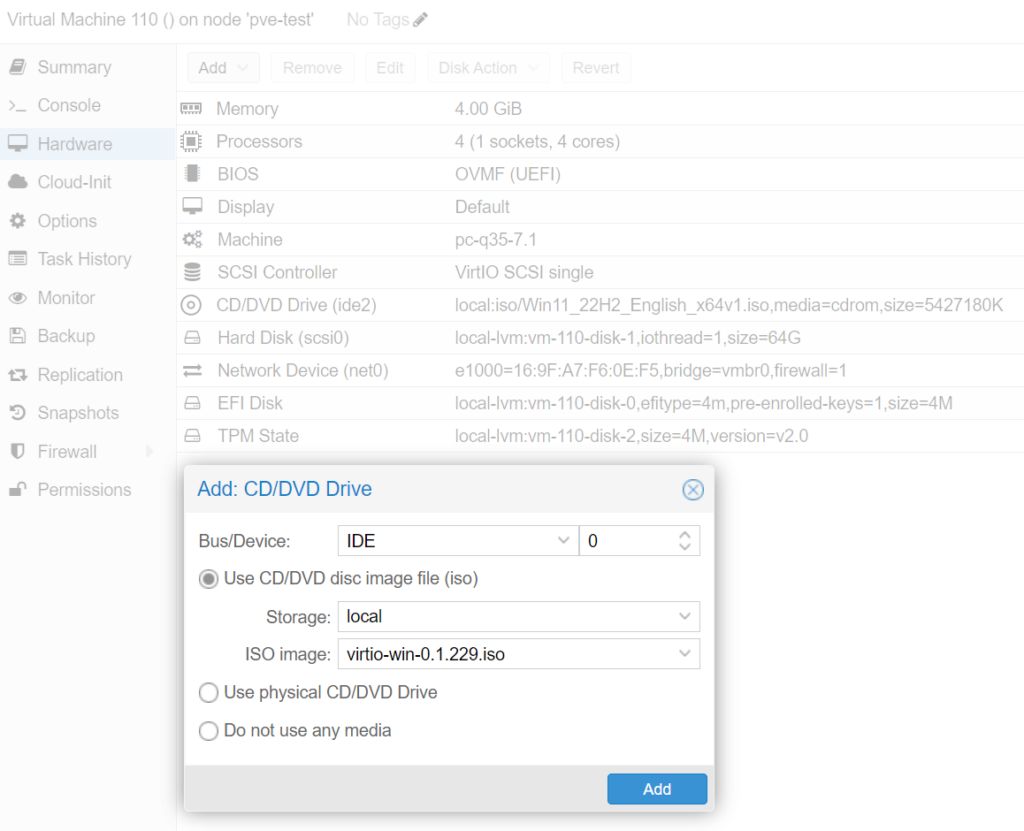
6. Finish creating the VM without starting it, select Hardware, then use Add > CD/DVD Drive to attach the current VirtIO ISO on IDE 0.
How to Install Windows 11 on Proxmox
Confirm that the second CD/DVD drive points to the current VirtIO ISO, then start the VM and boot from the Windows ISO. You may have to press a key in the console when prompted, and if the VM reports no bootable device, restart it and catch that prompt before it times out.
1. Choose the language and keyboard settings presented by Windows Setup.
2. At Select setup option, choose Install Windows 11, acknowledge that the installation removes files and applications when prompted, then continue through the new-install flow until you reach Select location to install Windows 11. If Setup asks for a product key or edition, choose the option that matches your license.
A new VirtIO SCSI disk usually won’t appear on the location screen yet. This is expected because Windows Setup doesn’t include that storage driver, and the next section installs it from the second ISO.
Load the VirtIO Storage Driver
If the disk list is empty, the VM hasn’t lost its virtual disk. Windows simply needs the VirtIO SCSI driver before it can display it.
1. Select Load driver, browse the VirtIO CD, and open vioscsi\w11\amd64.
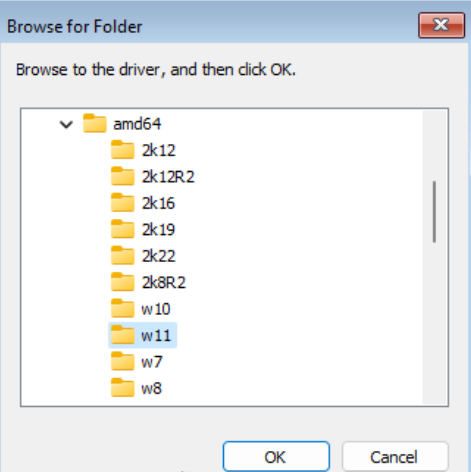
vioscsi\w11\amd64 above.2. Select Red Hat VirtIO SCSI pass-through controller, then continue to install it.
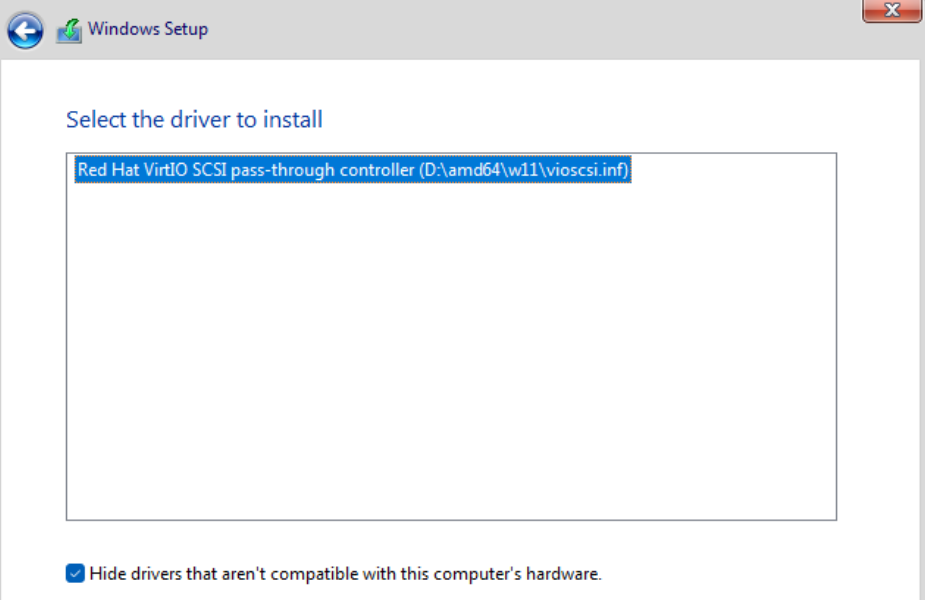
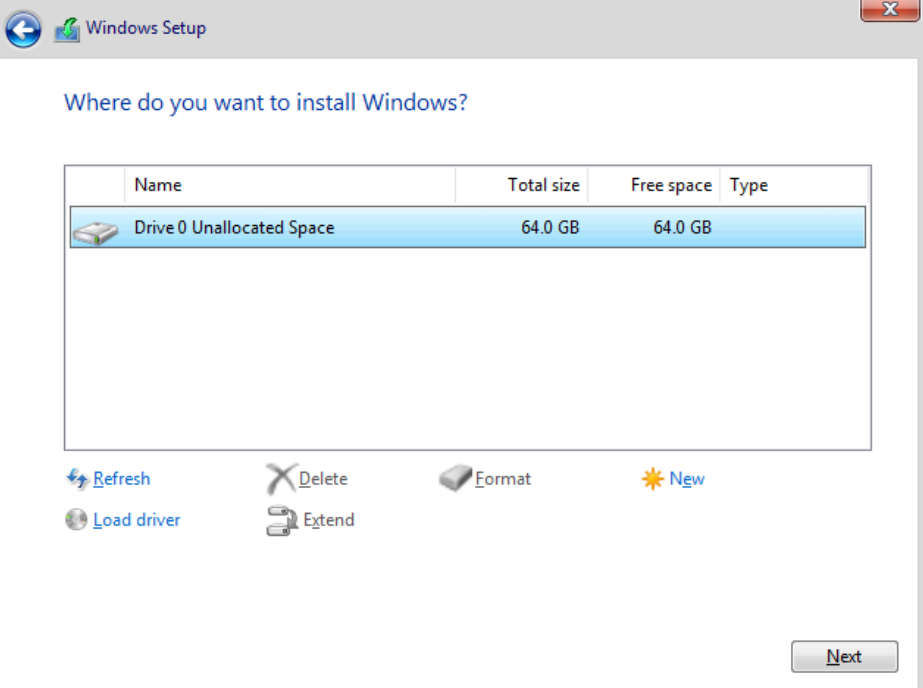
D:\amd64\w11; use vioscsi\w11\amd64 above.3. Confirm that the virtual disk now appears, but stay on this screen and load the network driver before starting the Windows installation.
Install the Windows 11 Network Driver During Setup
The VirtIO network adapter needs its own driver, and installing it now gives Windows a supported network connection before OOBE. This solves the missing-NIC problem directly, without depending on an account or network bypass command that can change between Windows builds.
1. On the disk/location screen, select Load driver again and browse the VirtIO CD to NetKVM\w11\amd64.
2. Select Red Hat VirtIO Ethernet Adapter, then continue to install it. If you’d like to load the optional balloon driver now, repeat the process with Balloon\w11\amd64 and select VirtIO Balloon Driver.
3. Return to the location screen, select the virtual disk, select Next, then select Install on Ready to install. Windows restarts several times before it presents the setup screens for the installed edition and build.
4. Complete Windows Setup with the account, privacy, and update choices it displays. Windows 11 Home requires an internet connection during OOBE, which is why the supported VirtIO network driver belongs before this stage.
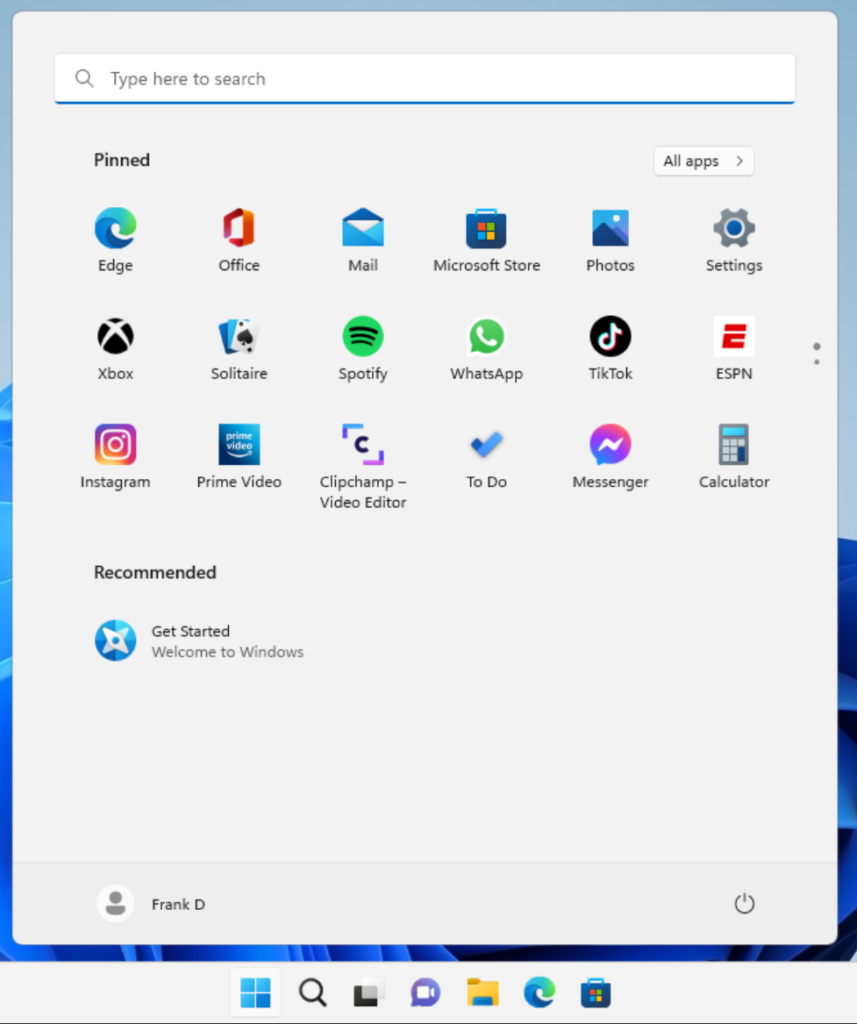
Install Proxmox Windows 11 Drivers and the QEMU Guest Agent
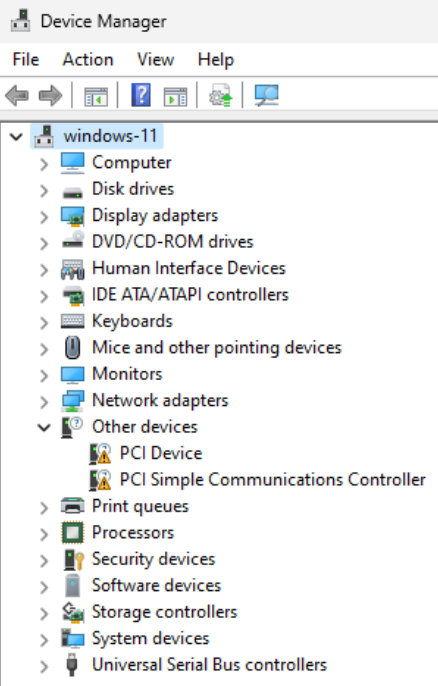
The storage and network drivers get Windows running, but the remaining VirtIO drivers and QEMU guest agent finish the VM integration. Open Device Manager first so you can see whether any devices still need a driver.
1. Open the VirtIO CD in File Explorer, browse to guest-agent\, and run qemu-ga-x86_64.msi to install the QEMU guest agent.
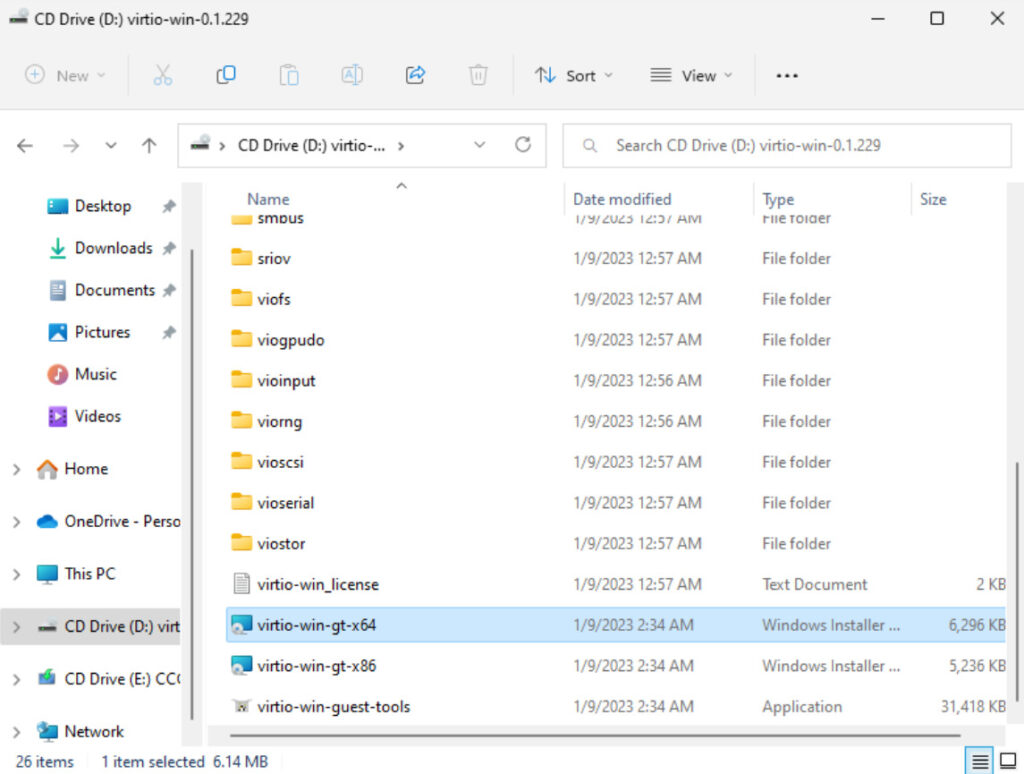
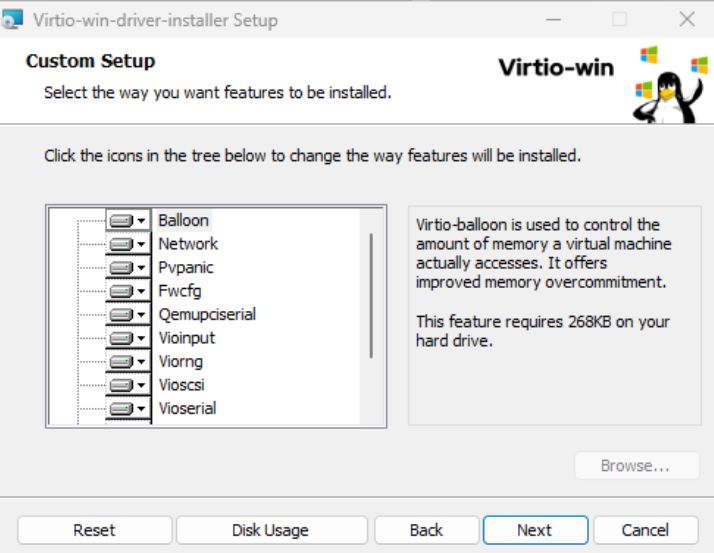
2. Return to the root of the VirtIO CD and run virtio-win-gt-x64.msi. Unless you use SPICE, you can deselect the Qxl and Spice components.
3. Restart Windows, then check Device Manager again. For any unknown device, select Update driver > Browse my computer for drivers, choose the VirtIO CD, and leave Include subfolders enabled.
4. Open the VM summary in Proxmox and confirm that it reports the guest’s RAM usage and IP configuration, which indicates that the guest agent is communicating with the host.